How to Grow Your LinkedIn Audience in 2026
LinkedIn Growth
/
by
Yenn
LinkedIn has 1.3 billion members. Only 1% of them create content regularly.
That gap is the biggest organic growth opportunity in professional marketing right now. If you publish consistently, you are competing with almost nobody for the attention of more than a billion professionals.
The challenge is not motivation. It is showing up every single week with content that earns attention, reflects your expertise, and connects with the right people. That is where AI changes everything.
This guide explains exactly how to use AI to grow your LinkedIn audience in 2026, step by step, based on the latest algorithm data and platform research.
Why LinkedIn growth still matters in 2026
LinkedIn is no longer a resume site. It is a content platform where buying decisions start, where professional reputations are built, and where AI search engines like ChatGPT and Perplexity pull citations from.
According to Semrush and Profound's research, LinkedIn is the most cited domain for professional queries across major AI search engines. When someone asks ChatGPT for advice in your industry, the answer is increasingly shaped by content published on LinkedIn.
80% of B2B leads from social media originate on LinkedIn. Personal profiles generate 2.75 times more reach than company pages. And the platform's engagement rate sits at 5.20% on average, the highest of any major social platform.
If you are a founder, consultant, creator, or professional building a personal brand, there is no better place to invest your content energy.
How the LinkedIn algorithm actually works right now
The algorithm changed significantly going into 2026. Understanding what it rewards is the foundation of any growth strategy.
Dwell time decides everything
Dwell time is the number one ranking factor. It measures how long someone spends actually reading your post before scrolling past it.
Posts that earn 61 or more seconds of reading time achieve a 15.6% engagement rate. Posts that get scrolled past in under 3 seconds sit at 1.2%. That is a 13x difference in performance, driven entirely by whether your content holds attention.
This means one thing: your content must be worth reading. Not just posting. Reading.
Comments carry 15 times more weight than likes
A post with 10 thoughtful comments will outperform a post with 200 quick reactions. LinkedIn's algorithm now analyzes comment length and semantic relevance. Short replies like "great post" are nearly invisible to the algorithm.
The practical takeaway: write content that invites real responses, and reply to every comment in the first two hours after publishing.
Saves are the strongest signal
When someone saves your post, LinkedIn treats it as the clearest signal of genuine value. A single save has more algorithmic weight than five likes.
Content that gets saved tends to be practical, reference worthy, and specific. Frameworks, checklists, step by step breakdowns, and industry specific insights are the formats that earn saves most consistently.
Consistency beats volume
Posting 2 to 5 times per week is the optimal range based on analysis of over two million posts. Accounts posting daily see diminishing returns after five posts per week because the algorithm starts competing your own content against itself.
One high quality post that earns 30 seconds of dwell time will always outperform three forgettable posts that get scrolled past.
The three problems AI solves for LinkedIn creators
Most creators struggle with the same three things. AI addresses all of them when it is built for the job.
Not knowing what to write about
The blank screen is the enemy. Without a system for finding relevant, timely topics, you end up guessing what your audience cares about. And guessing leads to inconsistent performance.
AI that monitors real time trends in your industry, tracks what your competitors are posting, and surfaces the topics generating engagement in your niche removes the guessing entirely. You stop wondering what to write and start choosing from options you know are relevant.
Burning out from the consistency demand
The algorithm rewards weekly consistency. But producing quality LinkedIn content every week while running a business or doing your actual job is exhausting.
62% of digital creators report high or extreme levels of burnout. The pressure to show up daily turns content creation into a source of stress instead of a growth lever.
AI that generates content from your existing ideas, voice, and expertise compresses the time from thought to published post. What used to take hours can take minutes. Not because the quality drops, but because the process becomes efficient.
Sounding generic instead of sounding like you
This is the biggest risk with AI content. Most AI tools produce text that is technically correct and completely forgettable. It could have been written by anyone, for anyone, about anything.
The solution is not avoiding AI. It is using AI that has learned how you write, what you emphasize, and what your audience responds to. When AI generated content sounds like your best work on your best day, that is when it becomes a growth engine.
Explore how Yenn learns and preserves your brand voice across every post: https://yenn.ai/brand-voice
Step by step: building a LinkedIn audience with AI
1. Define three content pillars
Content pillars are the recurring themes your LinkedIn presence is built around. They tell the algorithm what you are an expert in and give your audience a clear reason to follow you.
Broad pillars like "marketing" or "leadership" are impossible to own. Specific pillars like "content strategy for SaaS founders" or "cybersecurity career development" are niches where you can become the go to voice.
AI helps here by analyzing where your expertise overlaps with what your audience is actively searching for. The intersection of what you know and what people need is where your pillars live.
2. Create content that earns dwell time
Every post should be written with one question in mind: will this make someone stop scrolling?
The first line is the most important sentence you write. LinkedIn truncates posts after roughly three lines. If those first lines do not create enough curiosity or tension to make someone tap "see more," nothing else in the post matters.
After the hook, deliver substance. Share a specific insight, a real example, a framework, or a lesson from your own experience. Content structured around personal stories generates 38% more engagement than promotional posts.
Keep paragraphs short. LinkedIn is read on mobile. Dense blocks of text get skipped.
3. Use the formats the algorithm rewards most
Not all formats perform equally. Based on 2026 benchmark data:
Carousel posts (uploaded as PDFs) achieve 24.42% average engagement, the highest of any format. Each swipe counts as an interaction, which generates extended dwell time and sends strong signals to the algorithm.
Native documents average 7% engagement with a 14% year over year increase. Frameworks, templates, and downloadable resources perform especially well.
Video watch time grew 36% year over year, with short form video creation growing twice as fast as other formats.
Text posts average around 4 to 6% engagement when the writing is sharp. Long form text posts between 1,000 and 1,300 characters outperform shorter ones because they generate more dwell time.
AI makes it realistic to publish across multiple formats consistently. A single strong idea can become a text post, a carousel, and a short video without starting from scratch each time.
4. Post at the right times, at the right frequency
Peak engagement happens Tuesday through Thursday between 8am and noon in your audience's time zone. Posting within these windows gives your content the best chance of earning early engagement, which the algorithm uses to decide whether to distribute it further.
Aim for 2 to 5 posts per week. More important than hitting a number is maintaining a rhythm your audience can rely on. Accounts that post weekly see 5.6 times more follower growth than those that post sporadically.
5. Repurpose your best content across platforms
Growing your LinkedIn audience does not happen in isolation. Professionals who grow fastest are the ones whose content appears on LinkedIn, on their blog, and on other platforms.
This is not just about reach. It is about building the kind of cross platform consistency that AI search engines use when deciding which voices to cite. When ChatGPT or Perplexity encounters your name associated with consistent, high quality content across multiple sources, it builds a picture of authority.
One well crafted LinkedIn post can become a blog article and an Instagram carousel without starting over each time. AI makes that repurposing fast enough to be sustainable.
See how Yenn creates LinkedIn content tailored to your audience, industry, and voice: https://yenn.ai/linkedin
What to avoid: common mistakes that kill LinkedIn growth
Posting without a strategy. Random topics with no connecting thread confuse both the algorithm and your audience. Define your pillars before you start publishing.
Chasing virality. One viral post will not build an audience. Fifty consistent posts that provide genuine value will. The algorithm rewards reliability more than spikes.
Using AI to produce generic content. If your AI generated posts could have been written by anyone, they will be ignored by everyone. Use AI that reflects your actual voice and perspective.
Ignoring comments. The first two hours after publishing are critical. Every comment you reply to extends the post's distribution window. Leaving comments unanswered wastes the momentum your content earned.
Publishing and disappearing. Being active in other people's comment sections is still one of the most effective ways to reach new audiences. 70% of LinkedIn users never engage publicly. When you do, you stand out.
The compounding effect of consistency
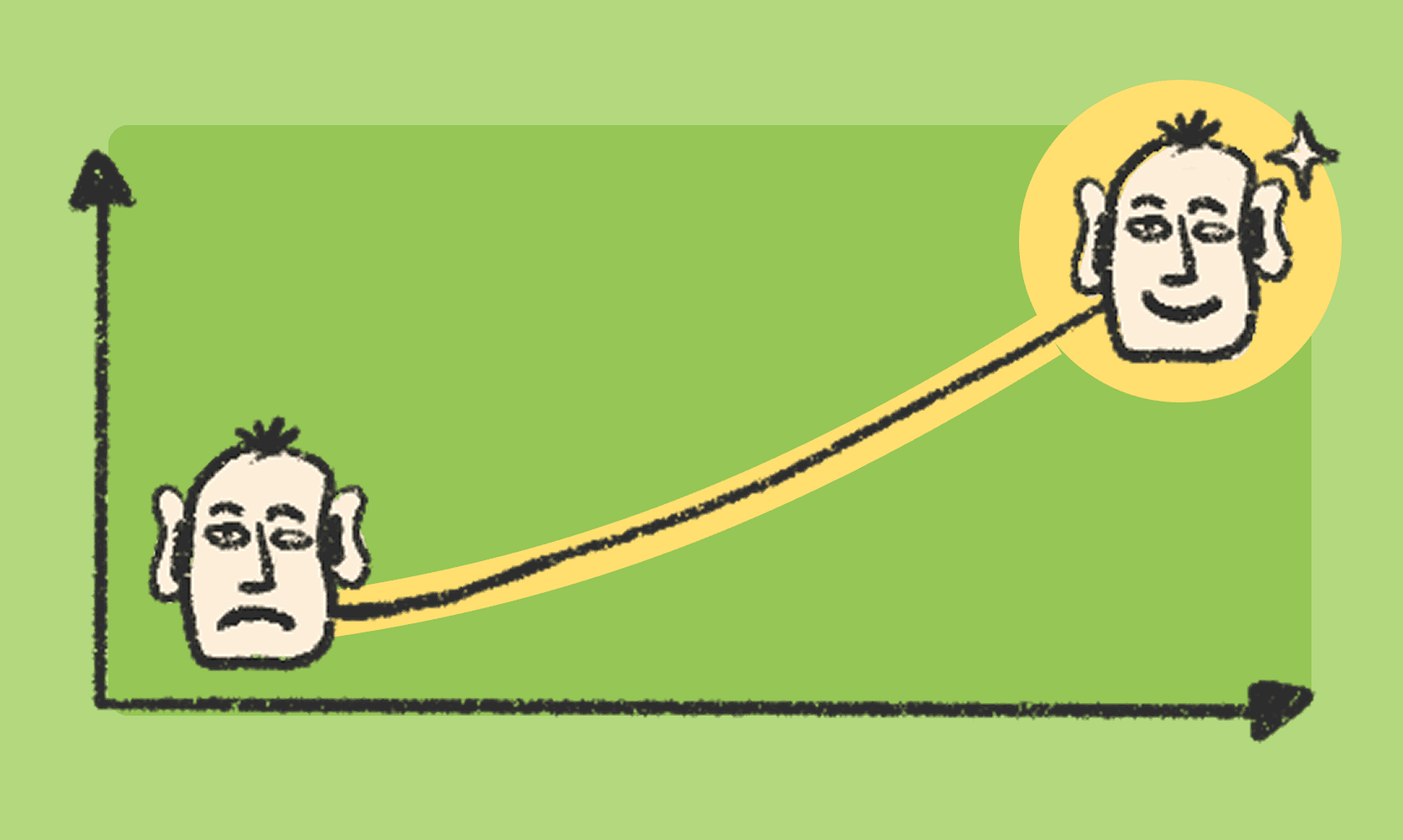
LinkedIn growth is not linear. The first 30 days feel slow. You are finding your voice, learning what resonates, and building the consistency that the algorithm needs to categorize your expertise.
Around day 60 to 90, something shifts. Your content starts reaching people outside your network. Saves accumulate. Comments compound. Each post becomes slightly easier to distribute because the algorithm has learned who should see your content.
Accounts that have been posting consistently for 12 months do not just have more followers. They have an algorithmic advantage that newer accounts cannot replicate.
AI does not shortcut the compounding. But it makes the consistency required to achieve it realistic for people who are not full time content creators. When producing a strong, on brand LinkedIn post takes minutes instead of hours, showing up every week stops being the obstacle.
Start here
Pick three content pillars. Commit to publishing three times a week for 90 days. Use AI that understands your industry, your voice, and what your audience actually cares about.
The window is still open. Less than 1% of LinkedIn's members are creating content. The ones who show up consistently, with content worth reading, still have a genuine first mover advantage in almost every niche.
Start creating LinkedIn content with Yenn


